046
La màxima nitidesa en la fotografia analògica (Ansel Adams i Minor White)
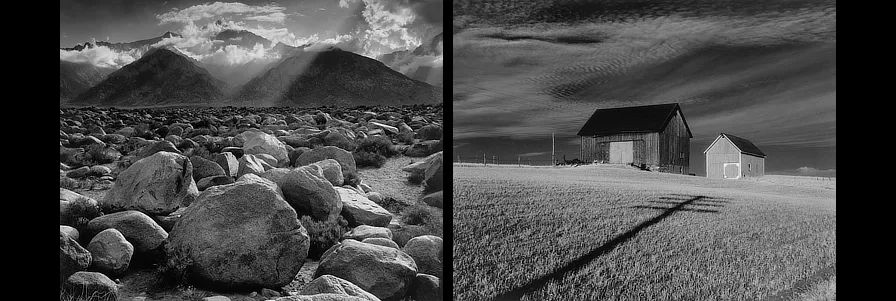
Al segle XX, la recerca de la màxima qualitat i nitidesa en una fotografia era la característica més rellevant dels autors d’estètica realista. Als Estats Units destacaren fotògrafs com Ansel Adams i Minor White, tots dos enfocats en la descripció idònia de les altes llums i de les ombres, així com en la màxima definició dels elements de la composició. Adams i White són referents en la intersecció entre l’art i la ciència, i aplicaven, sense prejudicis, tècniques fotogràfiques complexes tot buscant també un component “místic” en el contingut de les imatges.
Ambdós van aprofundir, practicar i divulgar el procés fotogràfic anomenat Sistema de Zones (1). Adams (2) va escriure una trilogia sobre aquest procés creatiu i va ser un dels fundadors del Group f/64 (3). White (4) en va fer una versió més pedagògica i va contribuir a la difusió del concepte d’equivalents (5) desenvolupat per Stieglitz. El Sistema de Zones només funcionava correctament amb la fotografia de plaques, tot i que es va fer recerca per adaptar-lo a la pel·lícula fotogràfica (6).
Paraules Clau
Referències
Textos
- 1. Stroebel, L; Zakia, R. (1993). Encyclopedia of Photography. Boston: Focal Press. P. 880.
“Zone System. Conceived in the late 1930s by Ansel Adams and Fred Archer as an attempt—in Adam’s words—“to provide a bridge between sensitometry… and practical creative work”. In fact, the system did combine the science and art of photography to an unprecedent degree and is still used and respected by many fine photographers today. Adams—whose name is popularly associated with the Zone System now—recognized the highly technical nature of photography and the necessity for materials testing, but he chose to avoid direct involvement in sensitometric analysis of films and papers. Instead he recommended a series of empirical test procedures that could be followed by any competent photographer, that required no special equipment, and that —when carefully executed—could provide adequately reliable information about the characteristics of the chosen materials”.
- 2. Adams, A. (1983). The Print: The New Ansel Adams Photography Series /Book 3. New York: Little, Brown and Company.
(Altres llibres de la sèrie: The Camera/ Book 1 i The Negative /Book 2)
- 3. Newhall, B. (1983). Fotografía. Historia de la Fotografía: Des de us orígenes hasta nuestros días. Barcelona: Gustavo Gili, S.A. P.188. (Títol original: The History of Photography from 1839 to the Present)
“En 1932 un grupo de fotógrafos más jóvenes, sumamente impresionados por Edward Weston y su obra, formaron una sociedad a la que le dieron el nombre de “Group f/64”. Eligieron un término óptico porque habitualmente fijaban sus lentes en esa obertura, para asegurarse una máxima nitidez de imagen, tanto para lo cercano como para lo lejano”.
- 4. White, M. (1967). Zone System Manual: How to previsualize your pictures. New York: Morgan & Morgan.
- 5. 060 Les imatges de núvols i els equivalents emocionals / Cloud images and emotional equivalents
- 6. Baïda, P ; Bertholdy, P.; Cégretin, M. (1985). Le Zone Systeme: Introduction à une méthode photographique. Paris: Les Cahiers de la Photographie, n.16.
Imatges
- Adams, A. (1982). Yosemite and the Range of Light. New York: Little, Brown and Company. Figura 46.
- White, M. (1978). Rites & Passages. New York: Aperture Foundation, Inc. P. 122.