100
AI, the Nebula of the Future
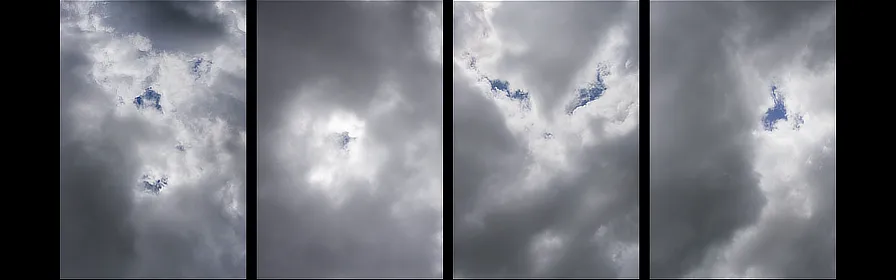
A few years ago, AI seemed like a utopia, but in a short time, it has become a support tool in the fields of science, education, culture, and communication. In 2023, Noam Chomsky (1) described how the so-called artificial intelligence could not be compared to human intelligence, and that this revolutionary technology brought as many reasons for optimism as for concern. In 2013, Howard Gardner (2) explained how the disruption caused by digital applications had generated a polarisation between the detractors and the admirers of new technologies.
From the perspective of photography and cinema, software such as Adobe Firefly (3) or OpenAI (4) have broken the "rules" of audiovisual communication. They allow for the transformation of forms and contents of images, the modification of lighting and colour tones, or the generation of photographic visions that do not exist from textual descriptions. They have altered, and can even invert, the relationships between creators and viewers, just as smartphones have allowed users of mobile platforms to be both senders and receivers of content at the same time.
From a historical reflection, Ernst H. Gombrich (5), in his book A Short History of the World, explained that as you delve deeper into the history of the past, you enter a nebula with little information. From a post-labour perspective, when you think about the evolution of the concept of AI, it’s like stepping into a nebula: it is difficult to imagine the future due to the lack of references. It’s like those days when you go out into the garden, look up at the sky, and see black and white clouds in continuous motion, forming gaps through which the blue sky is glimpsed. You don’t know if it will rain, if it will be a cloudy day, or if it will be sunny... And the answer, as the song says (6): "my friend, is blowing in the wind, the answer is blowing in the wind".
References
Texts
- 1. The New York Times (2023) [en línia]. Noam Chomsky: The False Promise of ChatGPT. Disponible a: < https://www.nytimes.com/2023/03/08/opinion/noam-chomsky-chatgpt-ai.html > (Data Consulta: 14 de juny 2024)
- 2. Bover, Antoni. «20/40/60. Una reflexió iconotextual de la fotografia com art i ciència». Temps d’Educació, 2021, Núm. 61, p. 215-242, https://raco.cat/index.php/TempsEducacio/article/view/400669.
“[…] Howard Garnerd, amb la col·laboració de Katie Davies, va publicar el llibre Generación APP on reflexiona sobre com tres generacions diferents es relacionen amb la tecnologia. Garnerd, que va néixer l’any 1950, forma part de la generació que es va formar amb els processos tecnològics analògics, mentre que Katie, 30 anys més jove va començar a veure la introducció dels ordinadors en la seva educació. La germana petita de la Katie, 10 anys més jove que ella, ja forma part plenament de la generació de nadius digitals. Tres generacions, tres comportaments diferents davant la disrupció digital. […] Cada canvi comporta una polarització entre defensors i detractors, no tothom veu les mateixes situacions des de la mateixa perspectiva. Garnerd ja parlava en el seu llibre sobre la generació APP sobre les dues maneres d’entendre l’evolució digital. Els que anomena com ciberutòpics que veuen el nou paradigma digital com un punt fort i una oportunitat per millorar la societat i, els que anomena com a teòrics escèptics que se centren més en els punts dèbils i els perills que comporta, i que pot comportar aquesta evolució sense fi de la tecnologia”.
- 3. Adobe Firefly [en línia]. Adobe Firely: El nuevo Firefly. Ahora más inteligente que nunca. Disponible a: < https://openai.com/index/sora/ > (Data Consulta: 14 de juny 2024)
Example of photo AI software.
- 4. OpenAI [en línia]. Creating video from text: Sora is an AI model that can create realistic and imaginative scenes from text instructions. Disponible a: < https://openai.com/index/sora/ > (Data Consulta: 14 de juny 2024)
Exemple de programari IA de vídeo.
- 5. Gombrich, E. (1999). Breu història del món. Barcelona: Editorial Empúries (Títol original: Eine kurze Weltgeschichte für junge Leser. 1936)
Example of video AI software.
- 6. Bob Dylan. (@BobDylan). Blowing In The Wind (Live on TV, March 1963). A: YouTube [en línia]. Data de publicació del post 11 Setembre 2012. [Consulta: 14 Juny 2024]. Disponible a: https://www.youtube.com/watch?v=vWwgrjjIMXA
Bob Dylan received the Nobel Prize in Literature in 2016 for the lyrics of his songs.
Images
- Series of clouds made from the patio of the house, without manipulation. For a few minutes, the shapes of the white clouds, and the black clouds, were being modified by the impulse of the wind, allowing a glimpse of the blue of the sky between the cracks.