008
Conceptual Minimalism in Photography (Ralph Gibson)
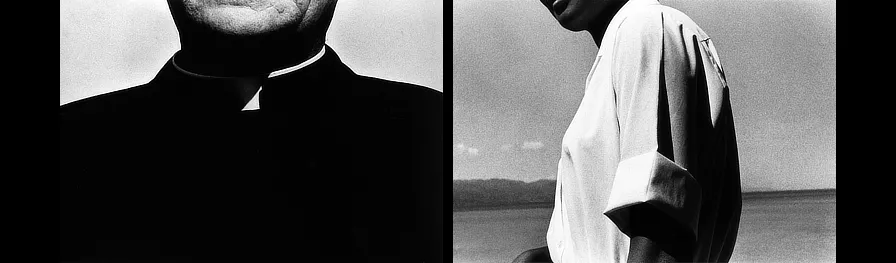
In the 1970s, particularly in the United States, there emerged a photographic trend where the most representative aspect of an image was the concept.
Ralph Gibson (1) is one of the most relevant authors of this period. In his early works, he used minimalism, applying the principle of "less is more" to the composition of his photographs.
During this period, the book of photographs (2) became an autonomous means of expression, through the succession and confrontation of the images. Gibson's trilogy (The Somnambulist, 1970; Déjà-Vu, 1973; Days at Sea, 1975) consists of three books without words. A visual narrative links photographs with light and shadows, volumes and textures, and/or iconic signs (forms and contents).
Gibson supported the idea of breaking the boundaries of the concepts of Decisive moment and Significant moment (3). For him, photographs were merely visual forms (4), and viewers imagined the content of the images if they wanted to.
Keywords
References
Texts
- 1. Ralph Gibson [en línia]. The Advancing Photographer. Disponible a: < http://www.ralphgibson.com/ > (Data Consulta: 14 de març de 2021)
- 2. Lemagny, J. C.; Rouillé, A. (1988) Historia de la Fotografia. Barcelona: Alkor (Títol original: Histoire de la Photographie). P. 204.
- 3. 007 L’instant decisiu vs. l’instant significatiu / The decisive moment vs. the significant moment
- Les Cahiers de la Photographie, n. 22 (1988). Ralph Gibson. Paris: Les Cahiers de la Photographie. P. 14.
“Gibson a ceci de très particulier parmi la plupart de ses contemporains qu’il prend des photos (il joue la prise) en vue de les rassembler et d’en assurer une construction continue et significative (il déjoue la méprise) dans un livre” (Denis Roche en l’article Incendie significatif)
- Ralph Gibson /1975) Days at Sea. New York: Lustrum Press Inc.
Images
- Les Cahiers de la Photographie, n. 22 (1988). Ralph Gibson. Paris: Les Cahiers de la Photographie P. 119.