046
Maximum Sharpness in Analogue Photography (Ansel Adams & Minor White)
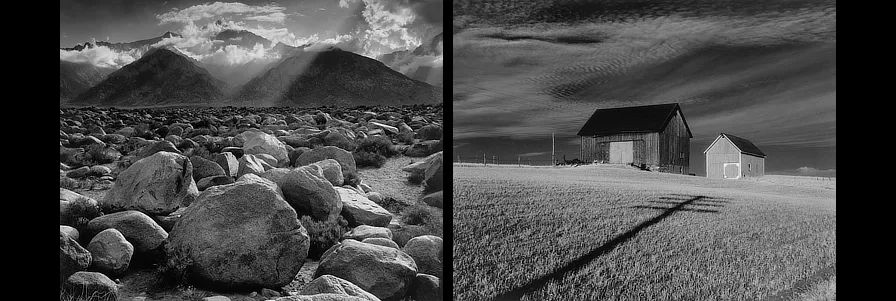
During the 20th century, striving for ultimate quality and clarity in photography became a defining trait among realist aesthetic writers. In the U.S., photographers like Ansel Adams and Minor White emerged prominently, concentrating on the meticulous portrayal of highlights and shadows, along with attaining superior clarity in compositional aspects. Both Adams and White are pivotal figures blending art with science, employing intricate photographic techniques impartially while also exploring a “mystical” dimension in their works.
Both studied, practiced, and shared the photographic method called the Zone System (1). Adams (2) authored a trilogy about this creative process and co-founded Group f/64(3). White (4) created a more instructional approach to this technique and helped popularize Stieglitz’s idea of equivalents (5). The Zone System was effective solely with large-format plate photography, even though efforts were made to adapt it for photographic film (6).
Keywords
References
Texts
- 1. Stroebel, L; Zakia, R. (1993). Encyclopedia of Photography. Boston: Focal Press. P. 880.
“Zone System. Conceived in the late 1930s by Ansel Adams and Fred Archer as an attempt—in Adam’s words—“to provide a bridge between sensitometry… and practical creative work”. In fact, the system did combine the science and art of photography to an unprecedent degree and is still used and respected by many fine photographers today. Adams—whose name is popularly associated with the Zone System now—recognized the highly technical nature of photography and the necessity for materials testing, but he chose to avoid direct involvement in sensitometric analysis of films and papers. Instead he recommended a series of empirical test procedures that could be followed by any competent photographer, that required no special equipment, and that —when carefully executed—could provide adequately reliable information about the characteristics of the chosen materials”.
- 2. Adams, A. (1983). The Print: The New Ansel Adams Photography Series /Book 3. New York: Little, Brown and Company.
(Other books in the series: The Camera/ Book 1 and The Negative /Book 2)
- 3. Newhall, B. (1983). Fotografía. Historia de la Fotografía: Des de us orígenes hasta nuestros días. Barcelona: Gustavo Gili, S.A. P.188. (Títol original: The History of Photography from 1839 to the Present)
“En 1932 un grupo de fotógrafos más jóvenes, sumamente impresionados por Edward Weston y su obra, formaron una sociedad a la que le dieron el nombre de “Group f/64”. Eligieron un término óptico porque habitualmente fijaban sus lentes en esa obertura, para asegurarse una máxima nitidez de imagen, tanto para lo cercano como para lo lejano”.
- 4. White, M. (1967). Zone System Manual: How to previsualize your pictures. New York: Morgan & Morgan.
- 5. 060 Les imatges de núvols i els equivalents emocionals / Cloud images and emotional equivalents
- 6. Baïda, P ; Bertholdy, P.; Cégretin, M. (1985). Le Zone Systeme: Introduction à une méthode photographique. Paris: Les Cahiers de la Photographie, n.16.
Images
- Adams, A. (1982). Yosemite and the Range of Light. New York: Little, Brown and Company. Figura 46.
- White, M. (1978). Rites & Passages. New York: Aperture Foundation, Inc. P. 122.