095
Visual communication and transhumanism (Black Mirror & Years&Years)
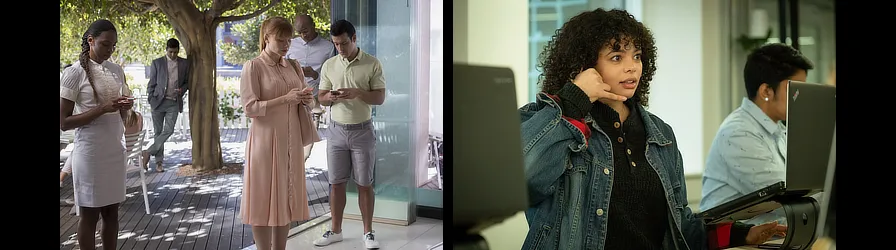
From a utopian perspective, transhumanism (1) is the social, political, and scientific movement that has been taking root primarily among the younger generations. In my last years of teaching, in the Visual Culture course, I observed a growing interest in transhumanism among some students; particularly in the innovations it brings to visual communication and the integration of technological devices into the human body. In the field of medicine, the evolution of biotechnology and the incorporation of mechanisms into the human body have contributed to improving the lives of many patients. There are many elements to consider regarding the topic of cyborgs (2); one of them is that humanistic reflections lag behind, rather than being alongside or ahead, of technological advancements.
Interprofessional work and human-computer interaction have contributed to the evolution of AI and created new ways of understanding the dimension of time. For example, from a photographic perspective, some television series have explored the theme of transhumanism. The series Black Mirror (3) is a fictional portrayal of technological changes and their repercussions on visual communication. The series Years & Years (4) takes a more realistic approach, raising humanistic doubts about technological evolutions.
References
Texts
- 1. Britannica [en línia]. transhumanism: social and philosophical movement. Disponible a: <https://www.britannica.com/topic/transhumanism > (Data Consulta: 7 de juny 2024)
- 2. Ginsburg,S; Jablonka, E; Zeligowski, A. (2022) Picturing the mind. Massachusetts Institute of Technology: The MIT Press. (Capítol 5.10. Virtual and Cyborg Realites. P. 210-211.
“[…] Glasses, false teeth, replacement heart-valves, hearing aids, diaries, calendars, microscopes, telescopes, radar, and the internet are some of the attached or detached bodily devices that we use to preserve or expand our sensory, motor, and cognitive abilities. Like reading and using calculators, such extensions have been assimilated into our current notion of the self and the world. We agree with the philosopher Andy Clark that humans are natural cyborgs (entities made up of both biological and technological components) for, as he put it, in humans, technologies become “integrated so deeply and fluidly into our existing biological capacities and characteristics that we feel no boundary between ourselves and the non-biological elements”.
- 3. NETFLIX [en línia]. Black Mirror. 2011. Disponible a: <https://www.netflix.com/es/title/70264888 > (Data Consulta: 7 de juny 2024)
- 4. filmaffinaty [en línia]. Years and Years (mini sèrie de TV). 2019. Disponible a: < https://www.filmaffinity.com/es/film247862.html > (Data Consulta: 7 de juny 2024)
Images
- XATAKA: González, M. (2016) [en línia]. 'Black Mirror', tercera temporada: guía con los todos los episodios y los vídeos publicados. Disponible a: < https://www.xataka.com/cine-y-tv/black-mirror-tercera-temporada-guia-con-los-todos-los-episodios-y-los-videos-publicados > (Data Consulta: 7 de juny 2024)
Frame from the episode "Nosedive," 3rd Season. The episode depicts a society where people rate their personal and virtual interactions through their phones. These ratings impact individuals' socioeconomic status. Currently, mobile phone addiction has increased, and more and more people are becoming fixated on the likes of their posts on social media.
- HBO [en línia]. Years&Years. Episode 3 Disponible a: <https://www.hbo.com/years-and-years/season-1/3-episode-3> (Data Consulta: 7 de juny 2024)
Frame from episode 3 of the series, where the young protagonist, obsessed with transhumanism, has placed microchips in her fingers, to be able to use them as a mobile phone.