032
The Evolution of Cities and Photography (Charles Marville & Gabriele Basilico)
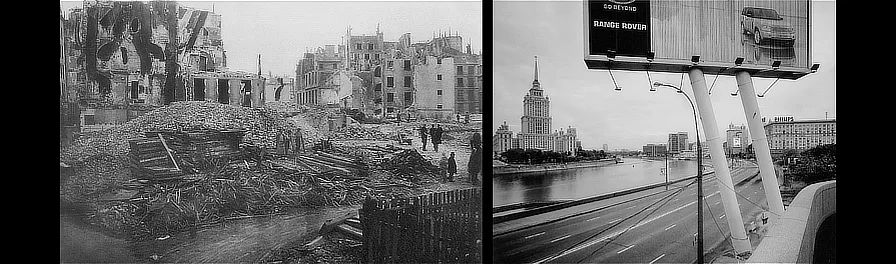
Cities are constantly changing environments, and in recent decades they have exhibited boundless spatial expansion (1). The camera, serving as a tool of perspective, plays a key role in capturing the city’s image. Today's photographs of urbanism (2) are historical markers that reflect the passage of time.
During the 19th century, Charles Marville (3) partnered with architect E. Viollet-le-Duc to photographically preserve architectural heritage. He documented G. Eugène Haussmann's urban planning through visual records that captured the destruction and reconstruction of Parisian neighborhoods and the unique features of the city’s street lamps and urban furniture.
In the 20th century, architect and photographer Gabriele Basilico (4) travelled to numerous cities to capture architectural globalisation and the uniqueness of various urban spaces. He distinguished himself through his mastery in selecting the point of view when creating images, effectively managing the visual obstructions (5) between the different elements of the photographic composition.
Keywords
References
Texts
- 1. Geddes, P. (2009) Ciudades en Evolución. Oviedo: KRK Ediciones. (Títol original, 1915: Cities in Evolution. An introduction to the town planning movement and to the study of civics)
- 2. Bover, A. Fotografia d’urbanisme: anàlisis de la imatge fotográfica en la comunicación visual d’un espai urbà. Regot, J. (Director). Tesi doctoral, Departament d’Expressió Gràfica Arquitectònica, UPC, 2011.
- 3. Thézy, M. (1994) Marville: Paris. Paris: Hazan, cop.
- 4. Basilico, G. (2008) Arquitecturas, ciudades, visiones. Reflexiones sobre la fotografía. Madrid: La Fábrica Editorial.
- Villanueva, Ll., J. (1996). Perspectiva lineal: Su relación con la fotografía. Barcelona: Edicions UPC. P. 196.
“[…] la fijación del punto de vista define las obstrucciones visuales que se producen entre unas partes y otras del objeto […] el perímetro del sector obstruido depende exclusivamente del punto de vista y del tema, siendo independiente de la dirección de la visual principal o, lo que es equivalente, de la orientación del plano del cuadro”.
Images
- Robinson, C.; Herschman, J. Architecture Transformed. A History of Photography of Buildings from 1839 to the Present. London: The MIT Press, 1988. P. 53.
Photograph documenting the demolition of houses in old Paris to construct the Avenue de l'Opéra.
- Basilico, G. Intercity. Madrid: La Fábrica Editorial, 2008.
This image exemplifies the author's style, showcasing an impeccable arrangement of elements and visual obstructions within the composition of the photograph.